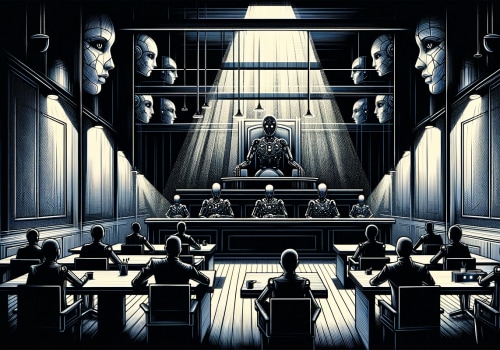
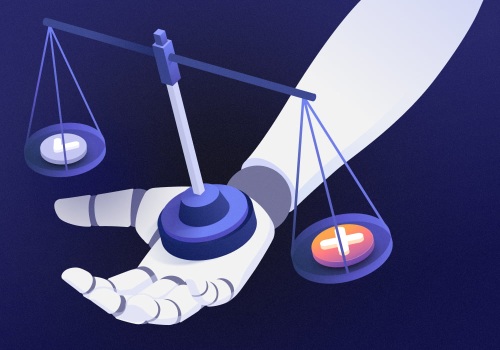
As artificial intelligence systems make decisions that affect people's lives—determining loan approvals, sentencing recommendations, benefit eligibility, hiring prospects—we face a critical challenge: how do we ensure these decisions are fair, not biased? How do we make those decisions auditable so anyone can see why an AI said "no"? Policy-as-code offers a solution: turning fairness rules into automated checks that AI systems must pass before affecting real people.
The Challenge of Ensuring Fairness in AI Systems
Artificial intelligence is increasingly making decisions that matter. An AI algorithm might determine whether someone receives a bank loan. Another might identify candidates for a job. A third might recommend sentences in a legal proceeding. Each of these decisions affects real people—their opportunities, their freedom, their dignity.
Traditional governance assumes human decision-makers review important choices. But as AI systems scale, human review becomes impossible. A bank might process thousands of loan applications daily. A recruiting firm might review thousands of resumes. A court system might handle millions of cases. At this scale, expecting humans to individually review each AI decision is neither practical nor fair to the humans doing the reviewing.
The real problem is deeper: without explicit, auditable rules built into the AI system itself, we cannot guarantee fairness. We cannot know if an AI system is rejecting loan applications because of race, gender, or other protected characteristics. We cannot be certain it is not perpetuating historical biases embedded in its training data. We cannot answer the most basic question: "Why did the AI make that decision?"
As organisations like the Artificial Justice Network advocate, ensuring AI fairness requires more than good intentions. It requires structural safeguards—rules encoded into technology itself that prevent unfair outcomes before they happen.
What Is Policy-as-Code?
Policy-as-code means translating fairness rules into automated checks that AI systems must pass. Instead of hoping AI systems "do the right thing," we make fairness enforceable through technology.
Here is a concrete example. Suppose a bank has a fairness requirement: "A loan application should not be rejected based on gender, marital status, or family composition." Traditionally, this would be a guideline in an employee handbook. People would read it and try to follow it.
Under policy-as-code, this requirement becomes an automated check:
1. The rule is defined in code: "If a loan application is rejected, the rejection reason must not be gender, marital status, or family composition."
2. The AI system must validate: Before rejecting an application, the AI checks whether any of these protected attributes caused the decision. If they did, the application is flagged for human review.
3. Every decision is auditable: A complete record exists of every rejection, why it occurred, and which fairness checks were applied.
4. The rule can be tested: Organisations can run historical data through these fairness checks to identify past cases where bias may have occurred.
The result: fairness is not aspirational—it is structural. The AI system cannot bypass these checks. It does not "choose" to be fair. Fairness is built into the system itself.
How Automated Governance Protects People
Traditional governance processes for AI systems create bottlenecks. A company might require a "fairness review committee" to approve new AI models before deployment. But this committee can only review a handful of models per week. As organisations deploy hundreds or thousands of AI systems, human review becomes a barrier to both innovation and, paradoxically, fairness improvements.
Policy-as-code eliminates this bottleneck by automating fairness checks. Instead of waiting for a committee meeting, new AI models are automatically tested against fairness policies:
Bias detection happens at deployment time. Before an AI model goes live, automated tests check: Does this model treat people from different demographic groups equally? Are rejection rates consistent across protected groups?
Fairness violations are caught before affecting people. If an AI system would systematically disadvantage a protected group, the system prevents deployment. No one is harmed by an unfair decision because the unfair system never goes into production.
Every decision is logged and auditable. When an AI system makes a decision affecting a person, a complete record is generated: what data was considered, which rules were applied, why the decision was made. This record allows anyone to review the decision and challenge it if unfair.
Rules can change without rewiring systems. If regulators or boards decide fairness standards need to change, the policy is updated and deployed. The underlying AI system does not need to be rewritten.
Gregory McKenzie, a registered Trans-Tasman patent attorney and systems architect, has developed what he calls a "law-to-code" methodology for precisely this kind of work—translating legal and regulatory requirements into automated technical controls. His consultancy NETEVO applies this approach to help organisations encode governance rules into their systems. As McKenzie describes it: "When you encode a fairness requirement as policy-as-code, you transform it from an aspiration into a technical control. You move from 'we hope our AI is fair' to 'our AI cannot be unfair because the system enforces fairness automatically.'"
Real-World Impact: Where This Works
These concepts are not theoretical. Organisations across banking, government, and public sector have deployed policy-as-code governance to protect people from unfair AI decisions.
Financial services institutions have automated fairness checks for loan and credit applications. Bias testing now happens before models are deployed—identifying and eliminating disparate impact that could unfairly affect applicants from protected groups.
Government agencies have implemented policy-as-code for benefits eligibility determinations. Rather than hoping caseworkers apply rules fairly, the AI systems themselves are governed by explicit fairness rules. An applicant's outcome does not depend on which caseworker reviews their file or unconscious bias—it depends on whether they meet objective, auditable criteria.
Recruitment platforms have embedded fairness checks into resume screening and candidate evaluation. AI systems are prevented from amplifying historical hiring biases that might disadvantage women or minorities in fields where they are underrepresented.
The common outcome: organisations gain dual benefits. They reduce the risk of unfair decisions harming people, and they build systems that can withstand audits and scrutiny from regulators and civil rights advocates.
The Future of Fair AI
As AI becomes more powerful and more widely used, fairness governance becomes more urgent, not less. An AI system that makes unfair medical diagnoses affects health. An AI system that makes unfair parole recommendations affects freedom. An AI system that makes unfair hiring decisions affects opportunity.
Policy-as-code is not the complete answer to AI fairness—it is a critical foundation. It ensures that explicit fairness rules are enforced automatically. It makes decisions auditable so people can challenge unfair outcomes. It allows organisations to demonstrate, to regulators and to themselves, that they are serious about fairness.
For the Artificial Justice Network and advocates of ethical AI, policy-as-code represents a shift from aspiration to accountability. Fairness becomes not something we hope for, but something we engineer, test, and enforce.
Key Takeaways
1. Fairness in AI requires explicit rules, not hope. Without encoded fairness safeguards, AI systems will perpetuate bias from their training data and historical decisions.
2. Policy-as-code makes fairness enforceable. Fairness rules become automated checks that AI systems must pass before they can affect real people.
3. Auditability builds trust. When every AI decision is logged with complete reasoning, people and regulators can verify that decisions were fair.
4. Automation scales fairness. As AI systems grow in number and impact, automated fairness governance is the only way to ensure consistency and prevent systematic unfairness.
5. Fairness is a technical requirement, not an afterthought. Building fair AI means treating fairness like security—as a core technical requirement, not a bolt-on addition.